
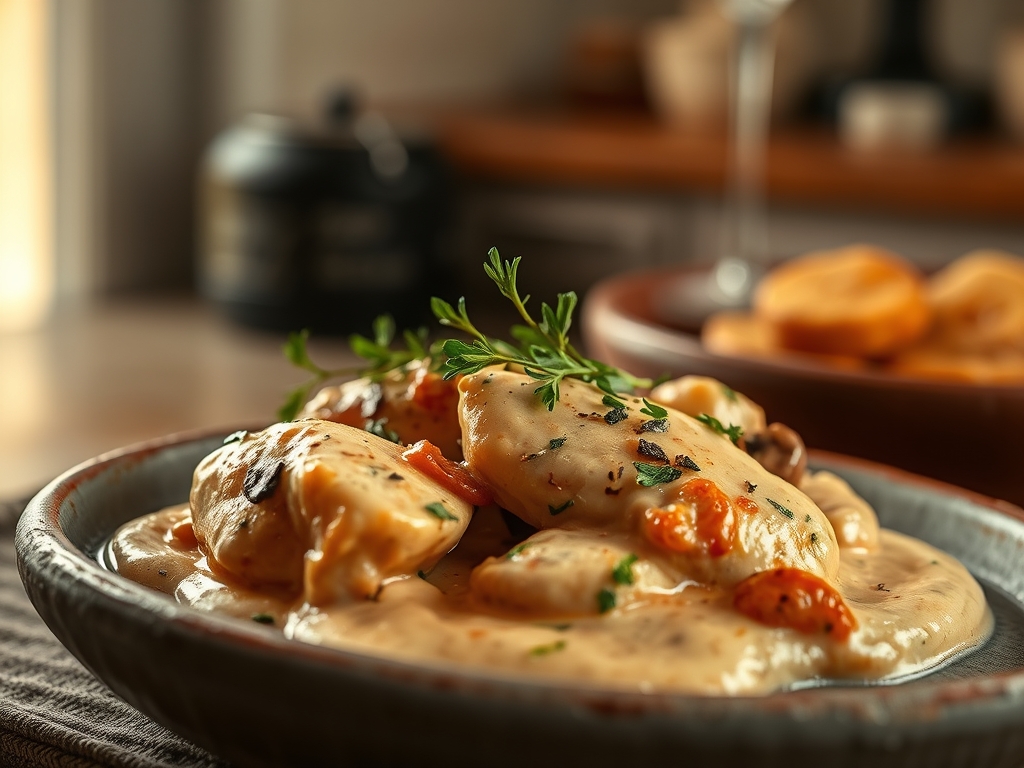
Picture a cold Tuesday evening where the air feels sharp and your energy is low. You need a culinary hug that does not require a four hour commitment. This is where campbell's cream of mushroom chicken recipes transform from a pantry staple into a high level gastronomic strategy for your weeknight survival.
The magic lies in the structural integrity of the soup itself. It is not just a liquid; it is a stable emulsion of heavy cream, vegetable oil, and modified cornstarch designed to withstand high thermal stress without breaking. When you introduce chicken to this environment, you are essentially creating a pressurized flavor chamber. The salt content in the soup acts as a gentle brine, drawing moisture into the muscle fibers while the fat provides a barrier against evaporation. Whether you are aiming for a classic smothered breast or a complex mushroom risotto hybrid, these recipes rely on the chemistry of convenience to deliver a piquant, velvety finish that mimics a reduction sauce made from scratch. We are moving past the "can opener" reputation and into the realm of professional texture management.

The Gathers:
To execute these six variations, your mise-en-place must be precise. Start with high quality poultry. Use a digital scale to ensure your chicken breasts or thighs are uniform in weight, typically 6 to 8 ounces each, to guarantee even heat distribution. You will need your aromatic base: yellow onions for their high sugar content (perfect for caramelization), fresh garlic, and perhaps a sprig of thyme to infuse the sauce with earthy notes.
Your secondary ingredients are what elevate the dish. Fresh cremini mushrooms provide a texture that the canned variety lacks; their cellular structure is more robust, allowing them to render their moisture and brown beautifully in a heavy-bottomed skillet. For the liquid components, keep a carton of low-sodium chicken stock nearby to adjust the viscous nature of the soup.
Smart Substitutions: If you find yourself without fresh mushrooms, use dried porcini mushrooms pulverized with a microplane into a fine dust to add an umami bomb to the sauce. If you need a lighter profile, swap half the soup for Greek yogurt to add a lactic tang, though you must whisk it in at the very end of the cooking process to prevent curdling. For a piquant kick, a tablespoon of Dijon mustard or a splash of dry white wine like Sauvignon Blanc can deglaze the pan and cut through the richness of the cream.
The Clock: Chef's Flow
Efficiency in the kitchen is about managing "dead time." The total prep time for these dishes is roughly 15 minutes, with a cook time ranging from 20 to 45 minutes depending on your heat source. The "Chef's Flow" dictates that you sear your protein first. While the chicken is undergoing the Maillard reaction in the pan, you should be using a bench scraper to organize your chopped aromatics.
By the time the chicken is ready to be flipped, your vegetables should be prepped and waiting. The "active" work ends once the soup is added and the heat is lowered to a simmer. This allows the collagen in the chicken to soften without the proteins becoming rubbery. Always allow for a 5 minute rest period after cooking; this is the crucial window for thermal carryover, where the internal temperature stabilizes and the juices redistribute.
The Masterclass:
1. The Sear and Deglaze
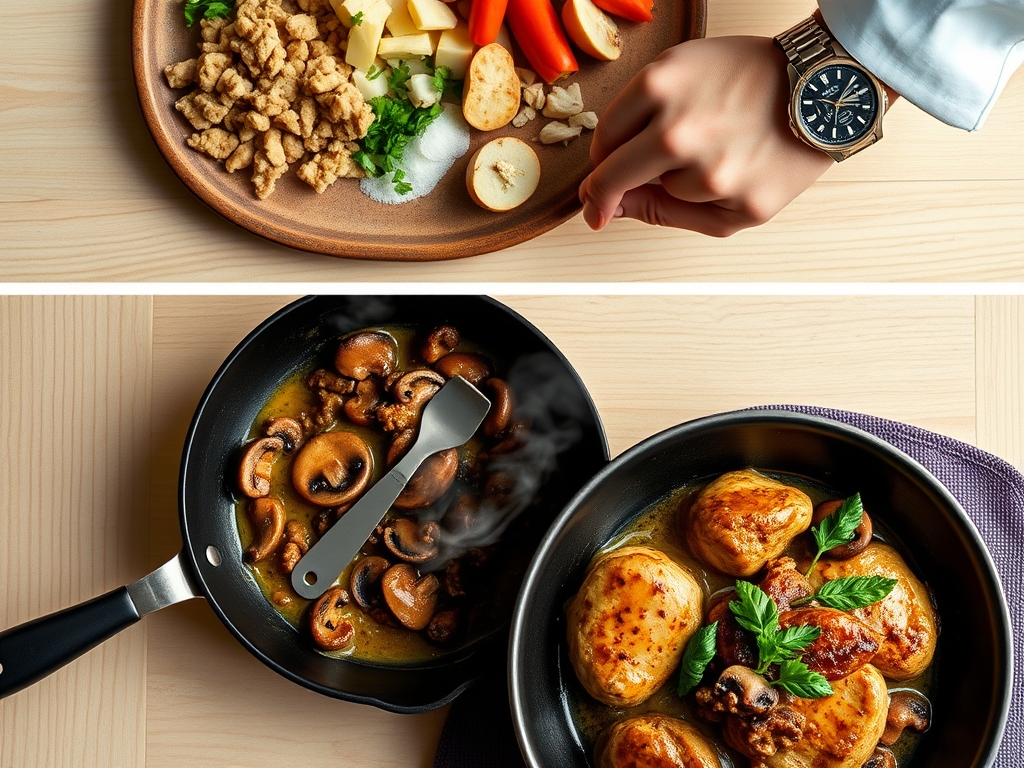
Heat your skillet over medium high heat until the oil shimmers. Place the seasoned chicken in the pan using tongs and do not move it for at least four minutes. This allows the proteins to bond and brown. Once flipped, remove the chicken and add your sliced mushrooms and onions. Use a wooden spoon to scrape the brown bits (the fond) from the bottom of the pan.
Pro Tip: This process is called deglazing. Those brown bits are concentrated flavor molecules created by the Maillard reaction; they are the secret to a professional tasting sauce.
2. The Emulsion Build
Lower the heat and whisk in your Campbell's Cream of Mushroom soup. If the mixture appears too thick or "gloppy," slowly stream in chicken stock or water while whisking constantly. You are looking for a nappe consistency, which means the sauce should coat the back of a spoon without running off immediately.
Pro Tip: Constant agitation during this step helps aerate the sauce and ensures the starches in the soup bond evenly with the fats from the chicken fat.
3. The Gentle Simmer
Return the chicken to the pan, nestling it into the sauce. Cover the skillet with a tight fitting lid to create a localized steam environment. This ensures the top of the chicken cooks via convection while the bottom braises in the liquid.
Pro Tip: Keep the temperature below a rolling boil. High heat causes muscle fibers to contract violently, squeezing out moisture and leaving you with dry meat. A gentle simmer preserves the cellular integrity of the poultry.
4. The Flavor Infusion
About five minutes before the dish is finished, add your fresh herbs or a squeeze of lemon juice. This is the time to check your seasoning. Use a saucier if you are making a larger batch to ensure the heat is evenly distributed across the curved bottom of the pan.
Pro Tip: Adding acids like lemon juice at the end prevents the acid from breaking down the cream too early, maintaining a smooth, velvety mouthfeel.
5. The Rest and Finish
Remove the pan from the heat and let it sit uncovered for three minutes. This allows the sauce to thicken naturally as the temperature drops slightly. Garnish with fresh parsley or a grating of Parmesan cheese using your microplane.
Pro Tip: This stage utilizes viscosity modulation. As the sauce cools, the starch molecules move slower and tangle together, creating that iconic "clingy" texture we love in comfort food.
6. The Plating
Serve the chicken over a bed of starch like egg noodles, mashed potatoes, or jasmine rice. Use a wide spoon to drape the remaining mushroom sauce over the protein, ensuring every inch is covered.
Pro Tip: Starchy bases act as a "sponge" for the sauce. The surface tension of the sauce allows it to fill the gaps between the grains of rice or noodles, creating a unified bite.
The Deep Dive:
Macro Nutrition: A standard serving of this dish provides approximately 320 calories, 28g of protein, and 14g of fat. To lower the sodium, look for the "Healthy Request" version of the soup, which reduces salt intake by nearly 40 percent without sacrificing the structural thickness.
Dietary Swaps: For a Keto version, skip the flour dredging and serve over steamed cauliflower florets. For Gluten-Free needs, ensure you use the specific GF Campbell's variety, as standard cream soups use wheat flour as a thickener. For a Vegan pivot, use the Campbell's Plant-Based Cream of Mushroom and swap chicken for thick cut "steaks" of roasted King Oyster mushrooms.
The Fix-It:
- Sauce is too salty: Add a splash of heavy cream or a teaspoon of sugar to balance the sodium levels.
- Chicken is rubbery: You likely overcooked it. Next time, use an instant read thermometer and pull the chicken at 160 degrees Fahrenheit; it will reach 165 during the rest.
- Sauce is "broken" or oily: Whisk in a tablespoon of warm water or a slurry of cornstarch and water to re-emulsify the fats.
Meal Prep: To maintain "day-one" quality, store the sauce and chicken together in an airtight container. When reheating, add a tablespoon of milk to the bowl. The microwave tends to vibrate water molecules so fast they escape as steam, leaving the sauce thick and gummy; the extra milk replaces that lost moisture.
The Wrap-Up:
Mastering campbell's cream of mushroom chicken recipes is about understanding that convenience does not have to mean a compromise in technique. By applying professional heat management and flavor layering, you turn a simple pantry can into a sophisticated meal that feels intentional and luxurious. It is the ultimate kitchen hack for the modern, busy home cook who still craves a bit of culinary soul.
The Kitchen Table:
Can I cook this in a slow cooker?
Yes. Place the chicken at the bottom, pour the soup over, and cook on low for 4 to 6 hours. This method breaks down connective tissue, resulting in a "pulled" texture that is excellent for sandwiches or over baked potatoes.
Why did my sauce turn watery?
This usually happens if you add frozen chicken that hasn't been thawed. As the chicken cooks, it releases "purge" (excess water), which thins the emulsion. Always pat your chicken dry with paper towels before searing to prevent this.
Can I use chicken thighs instead of breasts?
Absolutely. Thighs have a higher fat content and more myoglobin, making them more flavorful and forgiving. They can withstand longer simmering times without drying out, making them ideal for beginners or slow cooking methods.
How do I make the sauce darker and richer?
The secret is in the mushroom sear. Cook your mushrooms in butter until they are dark brown and slightly crispy before adding the soup. This adds deep, earthy tones and a more complex color profile to the final dish.