
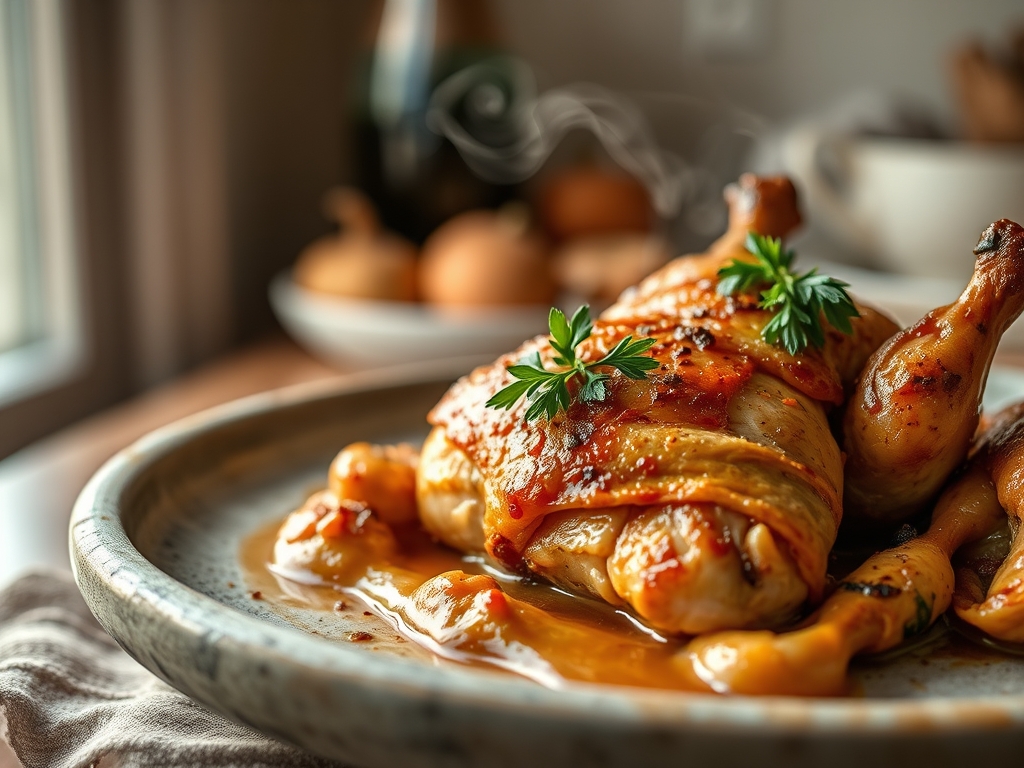
Imagine the scent of rosemary needles popping in hot rendered fat while a glaze of pomegranate molasses transforms from a thin liquid into a viscous, ruby lacquer. While the world obsesses over dry, oversized turkeys, the truly savvy host knows that christmas chicken recipes are the secret to a stress-free, high-flavor holiday. We are talking about skin so crisp it shatters like glass and meat that remains impossibly succulent thanks to superior moisture retention. Whether you are roasting a whole bird with truffle butter or braising thighs in a piquant white wine sauce, the goal is the same: maximum impact with minimal kitchen chaos. We are going to dive deep into the molecular magic of the Maillard reaction and the structural integrity of a perfect emulsion to ensure your festive table is the talk of the season. Grab your favorite heavy-bottomed skillet and let us get to work.
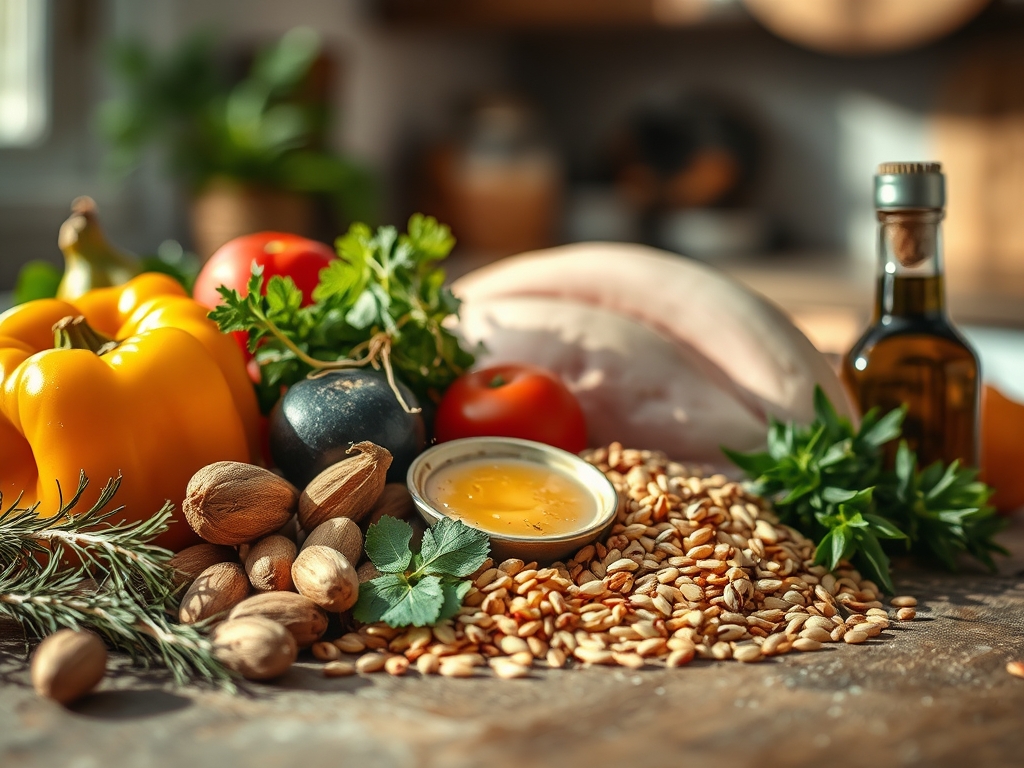
The Gathers:
To execute these christmas chicken recipes with precision, your mise-en-place must be flawless. Start with your aromatics: fresh thyme, sage, and rosemary. These contain essential oils like rosmarinic acid that infuse the fat during the cooking process. You will need high-quality fats; think unsalted European-style butter with a high butterfat content and cold-pressed olive oil. For the acids, keep lemons and a dry Chardonnay nearby to deglaze and balance the richness. Use a microplane to zest your citrus; this tool ensures you only capture the oil-rich flavedo without the bitter white pith.
Smart Substitutions: If you cannot find fresh tarragon, use a pinch of ground fennel seed to mimic that anise-like profile. For a dairy-free version of a creamy sauce, reach for full-fat coconut milk or a cashew cream. If you are out of white wine, a splash of verjus or a mild apple cider vinegar diluted with water provides the necessary acidity to cut through the lipids. Always use a digital scale for your dry ingredients to ensure consistency, especially when preparing a herb-salt rub for dry-brining.
The Clock
Efficiency in the kitchen is all about understanding "Chef's Flow." This is the art of overlapping tasks so that no time is wasted. For these christmas chicken recipes, expect a total active prep time of 45 minutes, with cooking times varying from 30 minutes for pan-seared breasts to 90 minutes for a slow-roasted whole bird.
Start by tempering your poultry; let it sit at room temperature for at least 30 minutes. This reduces the thermal shock when the meat hits the heat, ensuring more even cooking. While the meat tempers, use your bench scraper to organize your chopped aromatics. The "Flow" dictates that you prepare your cold sauces and garnishes while the chicken is in the oven, leaving the final 10 minutes of the "Clock" for resting the meat and finishing your pan sauces.
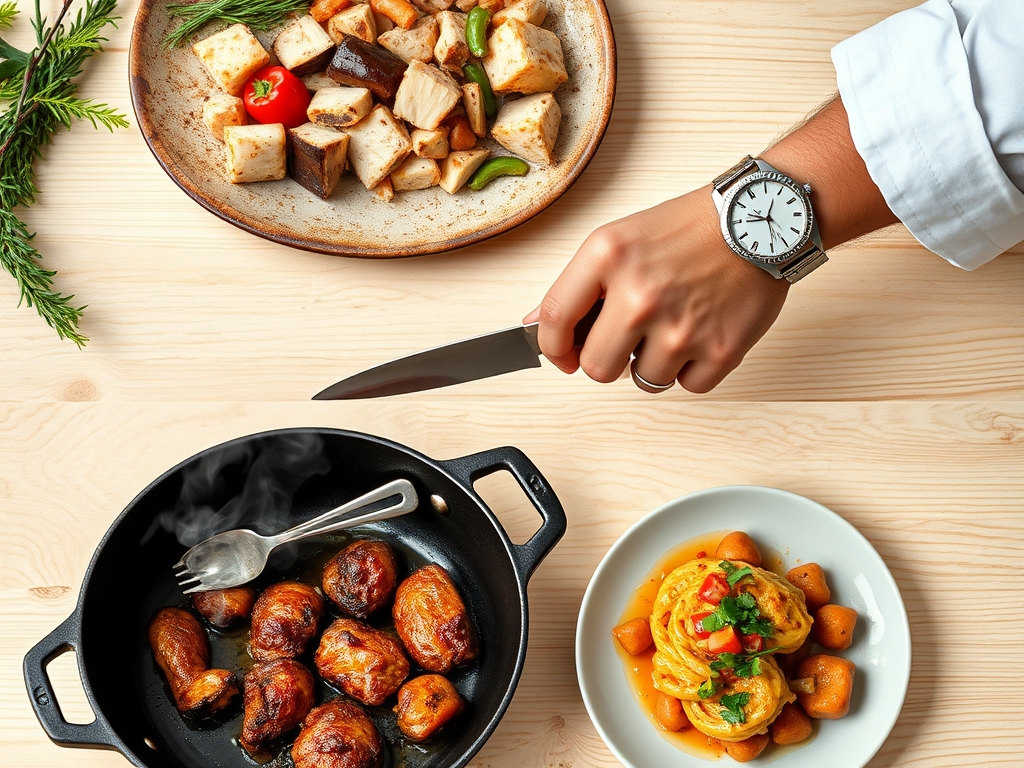
The Masterclass
1. The Dry Brine Technique
Pat the skin bone-dry with paper towels and apply a generous coating of kosher salt and herbs. Place the chicken uncovered in the refrigerator for at least four hours.
Pro Tip: This process utilizes osmosis to draw moisture out, then re-absorb the seasoned brine, which denatures the protein strands. This creates a more tender texture and ensures the skin is dehydrated enough for maximum crispness.
2. Searing for the Maillard Reaction
Heat your heavy-bottomed skillet until the oil reaches its smoke point. Place the chicken skin-side down and resist the urge to move it.
Pro Tip: The Maillard reaction occurs between 285 and 330 degrees Fahrenheit. It is a chemical reaction between amino acids and reducing sugars that creates hundreds of different flavor compounds. Moving the meat too early prevents this crust from forming.
3. Deglazing the Fond
After removing the chicken, pour off excess fat but keep the brown bits (the fond) at the bottom. Pour in your wine or stock and use a wooden spoon to scrape the bottom.
Pro Tip: Deglazing captures the concentrated flavors stuck to the pan. The alcohol in wine acts as a solvent, releasing flavor molecules that are not water-soluble, resulting in a more complex sauce.
4. Mounting the Sauce (Beurre Monte)
Whisk cold cubes of butter into your simmering liquid one at a time until the sauce becomes thick and glossy.
Pro Tip: This is the science of emulsification. By whisking cold butter into a hot liquid, you are suspending milk solids and fat in a water-base. If the sauce gets too hot, the emulsion will break and become greasy.
5. Managing Thermal Carryover
Remove the chicken from the heat when the internal temperature reaches 160 degrees Fahrenheit, rather than the target 165.
Pro Tip: Thermal carryover is the phenomenon where the internal temperature continues to rise after the heat source is removed. Resting the meat allows the muscle fibers to relax and reabsorb juices, preventing them from spilling out when sliced.
6. Infusing with Aromatics
During the final minutes of roasting, basting the chicken with herb-infused butter adds a final layer of flavor.
Pro Tip: Fat is a flavor carrier. By infusing the butter with fat-soluble compounds from garlic and thyme, you are coating the protein in a fragrant lipid layer that enhances the sensory experience.
7. The Final Glaze
Apply any sugar-based glazes (like honey or balsamic) only in the last five minutes of cooking.
Pro Tip: High sugar content leads to rapid caramelization and eventual burning. Applying the glaze late ensures you get a beautiful sheen and sweetness without the bitter carbonization of burnt sugar.
The Deep Dive
When we look at the macro nutrition, these christmas chicken recipes are a powerhouse of lean protein. A standard 6-ounce serving provides roughly 45 grams of protein and 12 grams of fat, depending on whether you keep the skin. For those on a Keto diet, increase the butter and skin consumption. For a Gluten-Free version, ensure your thickening agent for sauces is cornstarch or a roux made with almond flour.
The Fix-It:
- Soggy Skin: If your skin isn't crisping, the surface is too wet. Use a hair dryer on the cool setting to blast the skin before roasting.
- Broken Sauce: If your sauce separates, whisk in a teaspoon of heavy cream or a splash of water and Vigorously aerate it with a whisk to re-emulsify.
- Dry Breast Meat: This usually happens from overcooking. Use a digital probe thermometer to track the temperature in real-time.
Meal Prep & Reheating: To maintain "day-one" quality, reheat chicken in a 300-degree oven with a splash of chicken stock covered in foil. This creates a steam-chamber effect that prevents the proteins from tightening and becoming rubbery.
The Wrap-Up
Mastering christmas chicken recipes is about more than just following a list of steps; it is about understanding the chemistry of heat and flavor. By focusing on techniques like dry-brining and emulsification, you elevate a humble bird into a centerpiece worthy of any holiday gala. Remember to trust your tools, watch your temperatures, and always let the meat rest. Your guests will taste the difference that scientific precision and a little culinary wit can make.
The Kitchen Table
How do I keep my chicken from drying out?
The key is dry-brining and monitoring thermal carryover. Salt the chicken hours in advance to lock in moisture, and remove it from the oven at 160 degrees Fahrenheit. The temperature will rise to the safe 165 mark while resting.
Can I use frozen chicken for these recipes?
Yes, but ensure it is completely thawed in the refrigerator first. Excess moisture from ice crystals can prevent the Maillard reaction, so pat the chicken exceptionally dry with paper towels before you begin the searing process.
What is the best way to get crispy skin?
Dehydration is your best friend. Leave the chicken uncovered in the fridge overnight to dry out the skin. Additionally, starting the chicken in a cold pan and gradually raising the heat helps render the fat more effectively.
How do I make a pan sauce without wine?
Substitute the wine with a high-quality chicken bone broth and a tablespoon of lemon juice or white wine vinegar. This provides the necessary acidity and depth of flavor required to balance the savory fats in the pan.