
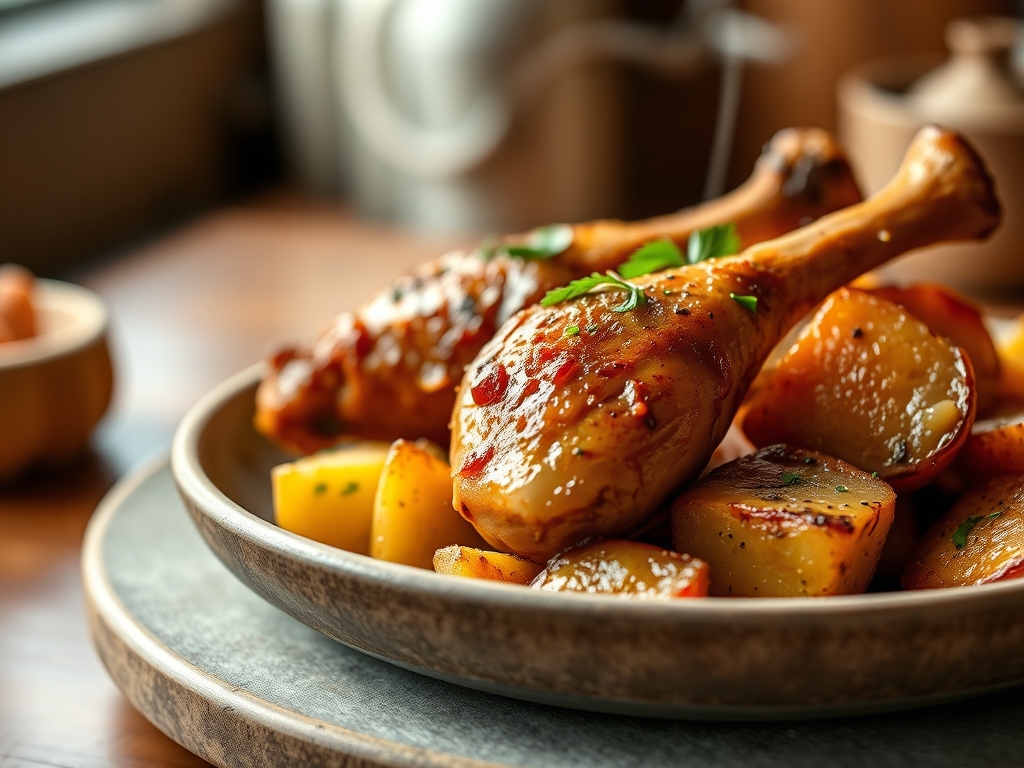
Picture the steam rising from a heavy bottomed skillet; it carries the scent of rosemary and rendered fat that clings to your kitchen walls like a warm hug. When you dive into chicken drumstick and potato recipes, you are not just making dinner; you are orchestrating a symphony of amino acids and starches. It is the ultimate culinary comfort.
The drumstick is a fascinating cut because it is rich in connective tissue. As it cooks, that collagen transforms into silky gelatin, coating your palate in a way a lean chicken breast never could. Pair that with the humble potato, a literal sponge for flavor, and you have a canvas for global spices. Whether you are craving a piquant lemon garlic glaze or a smoky paprika rub, these two ingredients are the reliable best friends of the culinary world. We are going to explore six distinct ways to elevate these staples from basic "sheet pan" status to a masterclass in texture and taste.
The Gathers:
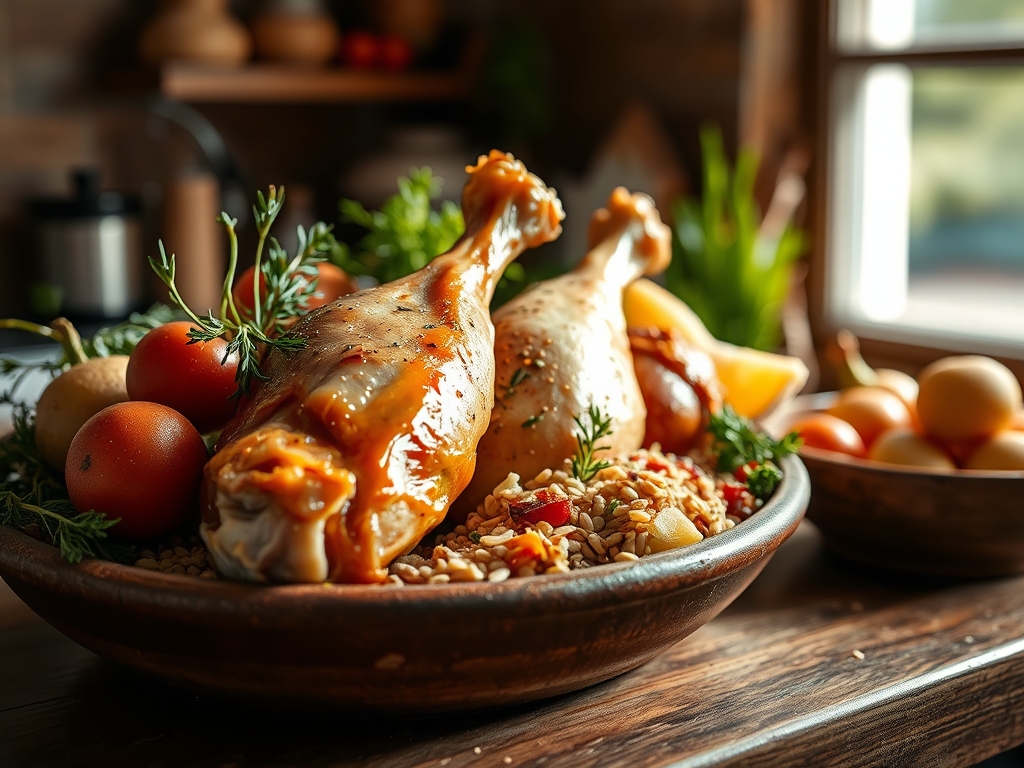
Before we ignite the burners, let us look at our mise-en-place through a scientific lens. You will need high quality chicken drumsticks, preferably air chilled to ensure the skin is not waterlogged. For the potatoes, reach for Yukon Golds; their medium starch content provides a creamy interior while maintaining structural integrity during high heat roasting.
Your aromatics are the backbone of these chicken drumstick and potato recipes. Fresh garlic, shallots, and woody herbs like thyme or oregano provide volatile oils that infuse the fat as it renders. You will also need a high smoke point oil, such as avocado or grapeseed oil, to facilitate the Maillard reaction without the oil breaking down into acrid compounds.
Smart Substitutions:
If you find yourself without Yukon Golds, Russets work for a fluffier texture, though they may crumble slightly. For a low carb twist, swap half the potatoes for cauliflower florets or radishes; once roasted, radishes lose their bite and take on a mellow, potato-like sweetness. If you are out of fresh herbs, use a microplane to zest a lemon into your dry rub to provide that essential brightness and acidity.
The Clock
Efficiency in the kitchen is all about "Chef's Flow." For most of these recipes, you are looking at a 15 minute active prep time and a 45 to 50 minute roasting period. The total time of roughly one hour is dictated by the thermal mass of the drumsticks. Unlike thinner cuts, the bone in the center of the drumstick acts as a heat conductor, but it also requires more time for the surrounding meat to reach a safe and succulent internal temperature of 175 degrees Fahrenheit. While the oven does the heavy lifting, use that 45 minute window to aerate a salad or deglaze your skillet for a quick pan sauce.
The Masterclass
1. The Surface Preparation
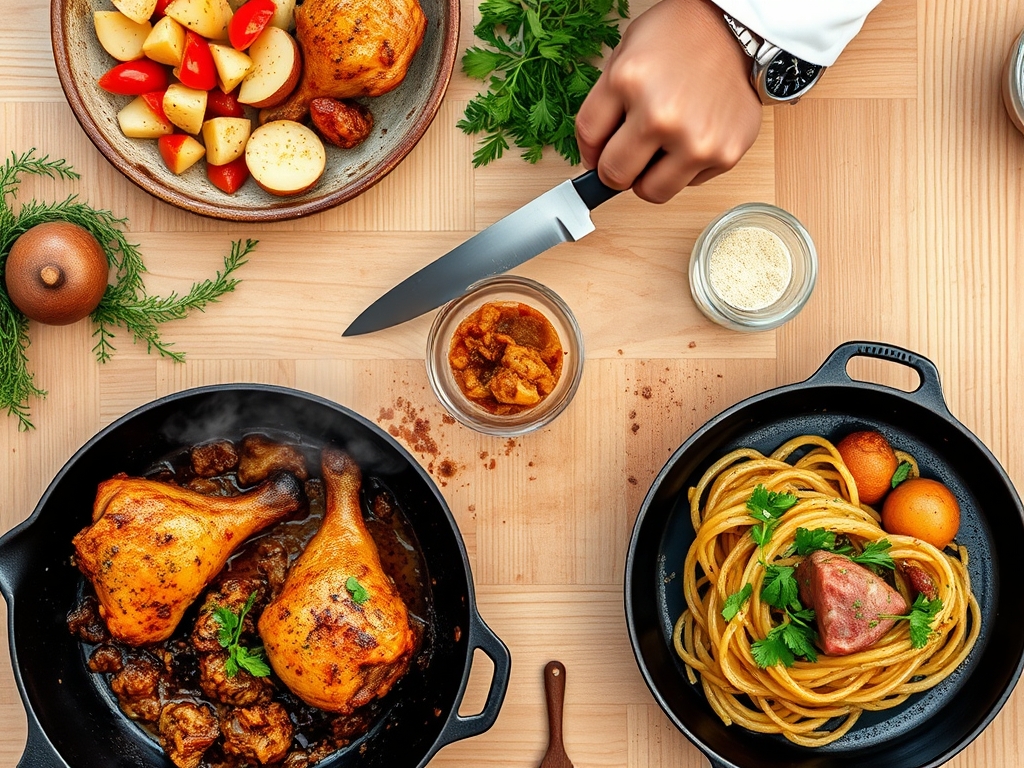
Pat your chicken drumsticks bone-dry with paper towels. Any residual moisture on the skin will create steam, which is the enemy of crispiness. Place them on a wire rack over a baking sheet to allow for 360 degree air circulation.
Pro Tip: This process utilizes evaporation. By removing surface water, you allow the heat to immediately begin the Maillard reaction, which is the chemical reaction between amino acids and reducing sugars that gives browned food its distinctive flavor.
2. The Emulsified Rub
In a small bowl, whisk together your oil, salt, pepper, and spices until they form a viscous slurry. Use your hands or a silicone brush to coat every nook and cranny of the chicken and the cubed potatoes.
Pro Tip: Fat is a flavor carrier. By creating an emulsion of oil and spices, you ensure that the fat soluble flavor compounds in your spices are evenly distributed across the surface area of the food.
3. The High Heat Sear
If you are using a heavy bottomed skillet, sear the drumsticks for 3 minutes per side before adding the potatoes and moving the whole pan to the oven. If using a sheet pan, preheat the pan in a 425 degree Fahrenheit oven before adding the food.
Pro Tip: This is known as conduction. Contact with a preheated surface triggers immediate searing, preventing the meat from sticking and jumping starting the rendering of the subcutaneous fat.
4. The Strategic Flip
Halfway through the cooking time, use stainless steel tongs to flip the drumsticks and toss the potatoes. This ensures that the side in contact with the pan does not over-brown while the top stays pale.
Pro Tip: Tossing the potatoes redistributes the rendered chicken fat, which acts as a roasting medium. This fat has a higher flavor profile than plain oil because it contains dissolved proteins from the meat.
5. The Internal Temp Check
Use a digital thermometer to check the thickest part of the drumstick, avoiding the bone. You are aiming for 175 degrees Fahrenheit for drumsticks, as this higher temperature allows the tough connective tissue to fully break down.
Pro Tip: This accounts for thermal carryover. Even after you remove the pan from the heat, the internal temperature will rise by 3 to 5 degrees as the energy moves from the exterior toward the center.
6. The Rest and Deglaze
Transfer the chicken to a warm plate and let it rest for 5 minutes. If you used a skillet, place it back on the stove, add a splash of chicken stock or white wine, and use a bench scraper to loosen the browned bits (fond).
Pro Tip: Resting allows the muscle fibers to relax and reabsorb juices. If you cut into the chicken immediately, the internal pressure would force all that delicious moisture onto the plate.
The Deep Dive
From a macro perspective, chicken drumsticks are an excellent source of protein and essential minerals like zinc and selenium. While they contain more fat than breasts, much of it is monounsaturated. Potatoes provide complex carbohydrates, potassium, and vitamin C.
Dietary Swaps:
For a Keto version, replace potatoes with turnips or rutabaga. To make this Vegan, use cauliflower "steaks" and king oyster mushrooms in place of chicken, using a dash of liquid smoke to mimic the savory depth. For a Gluten Free guarantee, ensure your spice blends do not contain anti-caking agents derived from grain.
The Fix-It:
- Soggy Skin: Your oven temperature was likely too low or the pan was overcrowded. Next time, ensure at least an inch of space between each piece to allow steam to escape.
- Burned Garlic: If your garlic turns bitter, you likely added it too early. Mix minced garlic with a bit of oil and add it during the last 10 minutes of roasting.
- Dry Meat: This happens if you pull the chicken at 165 degrees. While safe, drumsticks need that extra 10 degrees to melt the collagen. Use your digital scale to ensure consistent potato sizing for even cooking.
Meal Prep:
To maintain "day one" quality, reheat your leftovers in an air fryer or a toaster oven at 350 degrees. This dries out the skin again, whereas a microwave would make the potatoes gummy and the chicken rubbery.
The Wrap-Up
Mastering chicken drumstick and potato recipes is like learning a secret language of comfort. It is about understanding how heat interacts with fat and starch to create something greater than the sum of its parts. Once you nail the technique of rendering and roasting, you can swap flavors like a pro; think harissa and sweet potatoes or soy ginger and fingerlings. Now, grab your tongs and get roasting!
The Kitchen Table
How do I get the chicken skin extra crispy?
Pat the skin completely dry and salt it thirty minutes before cooking. Use a wire rack to allow hot air to circulate under the drumsticks, and ensure your oven is at least 425 degrees Fahrenheit to rapidly render the fat.
Can I cook frozen drumsticks and potatoes together?
It is not recommended. Frozen meat releases excess moisture, which steams the potatoes instead of roasting them. For the best texture and food safety, always thaw your chicken completely in the refrigerator before beginning the roasting process.
What are the best potatoes for roasting with chicken?
Yukon Gold potatoes are the gold standard. They possess a waxy yet creamy texture that holds its shape during the long roasting time required for drumsticks while absorbing the savory rendered chicken fat for maximum flavor.
Why are my roasted potatoes sticking to the pan?
Potatoes stick when the starch has not yet formed a crust. Avoid moving them for the first 20 minutes. Also, ensure you use enough oil and preheat your baking sheet before adding the ingredients to create an immediate sear.