
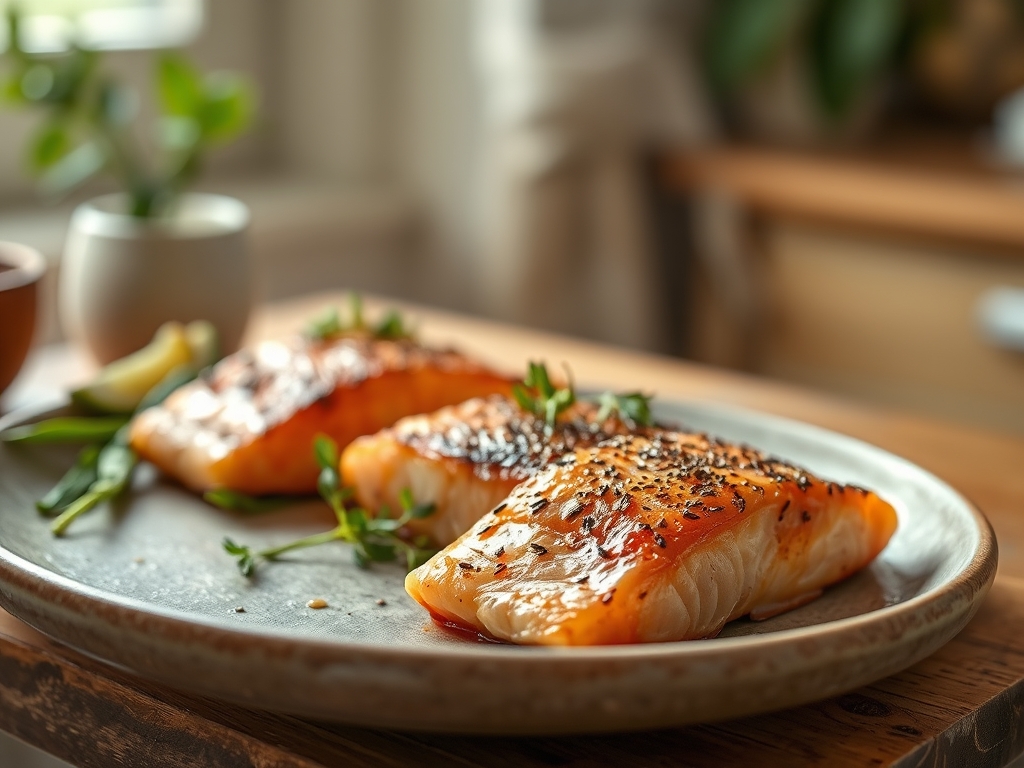
Picture this: a heavy-bottomed skillet sizzling on the range, the air thick with the scent of toasted butter and sea salt, and a fillet of fish so perfectly seared it shatters under your fork. If you have ever struggled with rubbery, overcooked fillets, mastering america's test kitchen salmon recipes is your ticket to culinary redemption. We are moving beyond the basic bake and into the realm of precision science; where heat meets fat to create something truly transcendent.
The secret to that restaurant-quality crust is not magic; it is chemistry. We are talking about the Maillard reaction, a chemical dance between amino acids and reducing sugars that occurs around 300 degrees Fahrenheit. Most home cooks fear the high heat, but we are going to embrace it. By understanding how protein fibers contract and how moisture behaves under pressure, you will transform a simple piece of seafood into a masterpiece of texture and flavor. Grab your apron and your favorite tongs; we are about to dive deep into the mechanics of the perfect sear.
The Gathers:
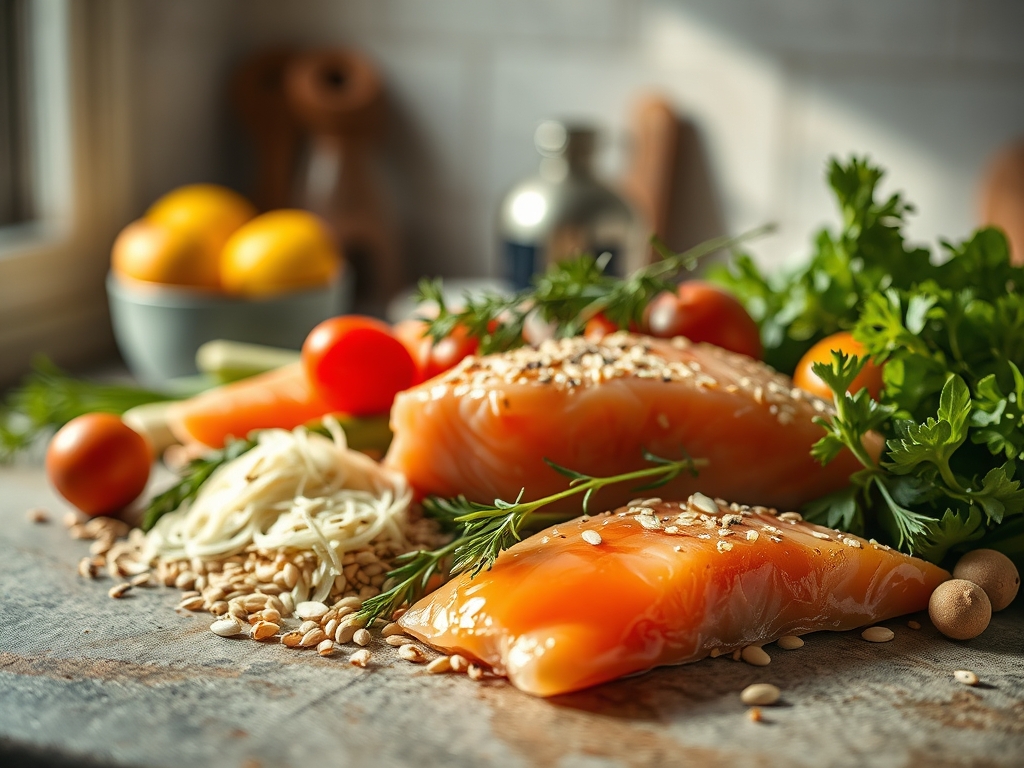
To execute these america's test kitchen salmon recipes with precision, your mise-en-place must be flawless. Start with center-cut Atlantic or King salmon fillets, ideally six to eight ounces each. You will need high-smoke-point fats; think avocado oil or clarified butter (ghee) to avoid acrid, burnt notes. For the seasoning, use Diamond Crystal kosher salt for its hollow, pyramid-shaped crystals that adhere better to the flesh, and freshly cracked black pepper for a piquant bite.
Smart Substitutions: If you cannot find high-quality fresh salmon, high-fat steelhead trout is a magnificent stand-in. For those avoiding dairy, replace the butter finish with a splash of viscous extra-virgin olive oil or a spoonful of white miso paste to provide that essential umami depth. Always keep a lemon nearby; the citric acid acts as a "brightness" regulator, cutting through the rich, fatty lipids of the fish.
The Clock:
The "Chef's Flow" is all about timing and thermal management. Total active prep time is exactly 15 minutes, focusing on drying the skin and tempering the fish. The cooking phase is a rapid-fire 8 to 10 minutes, depending on the thickness of the fillet. However, the most critical part of the clock is the 5-minute rest period.
During this rest, thermal carryover allows the internal temperature to rise by about 5 degrees while the muscle fibers relax, ensuring the juices stay inside the fish rather than spilling onto your plate. If you rush this, you lose the moisture that makes the fish succulent. Precision is key; use a digital thermometer to pull the fish at exactly 125 degrees Fahrenheit for a perfect medium-rare.
The Masterclass:
1. The Desiccation Ritual
Use a paper towel to pat the salmon bone-dry. Any surface moisture will turn to steam, preventing the skin from becoming crisp.
Pro Tip: This is about evaporative cooling. If the surface is wet, the temperature cannot rise above 212 degrees Fahrenheit, which is too low for the Maillard reaction to occur.
2. The Cold-Pan Start
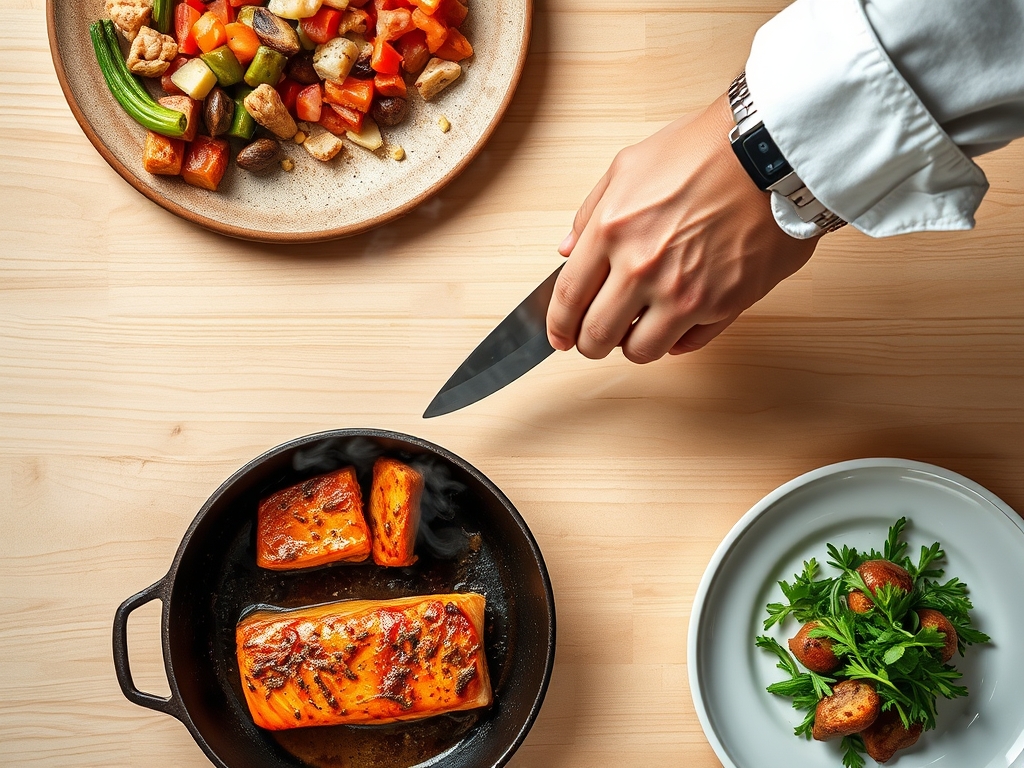
Place the fillets skin-side down in a cold, heavy-bottomed skillet with a thin layer of oil, then turn the heat to medium-high.
Pro Tip: Starting cold allows the subcutaneous fat to render slowly. This prevents the skin from shrinking too fast and curling away from the heat source.
3. The Weight Technique
Press down firmly on each fillet with a flexible fish spatula for the first 30 seconds of cooking.
Pro Tip: This ensures maximum surface-area contact. By preventing the protein from buckling, you achieve a uniform, golden-brown crust across the entire skin.
4. The Gentle Flip
Once the skin is translucent and crispy, gently flip the fish using your tongs to sear the flesh side for just 60 seconds.
Pro Tip: This brief exposure to heat creates a thermal barrier. It sets the exterior proteins without overcooking the delicate interior fats.
5. The Butter Baste
Add a knob of butter and a crushed garlic clove to the pan, tilting it to spoon the foaming fat over the fish.
Pro Tip: This is called arroser. The hot fat infuses the fish with aromatics and ensures the top stays moist while the bottom stays crisp.
The Deep Dive:
Macro Nutrition: A standard 6-ounce serving provides roughly 34 grams of high-quality protein and 18 grams of healthy fats, primarily Omega-3 fatty acids. It is a powerhouse for brain health and inflammation reduction.
Dietary Swaps: For a Keto-friendly version, serve with a lemon-caper butter sauce. For a Vegan "salmon" alternative, use thick-cut slabs of salt-roasted carrots or marinated tofu, though the cooking times will vary significantly. This recipe is naturally Gluten-Free, provided you check your seasonings.
The Fix-It:
- The Albumin Leak: If white gunk appears on the fish, you cooked it too fast or too high. Fix it by lowering the heat immediately; it is just coagulated protein.
- Stuck Skin: If the skin sticks, do not force it. It will naturally release from the pan once the proteins have fully carbonized and browned.
- Soggy Bottom: If the skin softens after plating, you likely rested it on a flat surface. Rest it on a wire rack to allow air to circulate.
Meal Prep: To reheat salmon without it becoming "fishy," avoid the microwave. Use a low-temperature oven (275 degrees) with a splash of water and a foil cover to gently re-steam the fish. This preserves the delicate lipid structure.
The Wrap-Up:
You have just graduated from the school of america's test kitchen salmon recipes! By focusing on desiccation, temperature control, and the magic of the Maillard reaction, you have unlocked a level of flavor most home cooks never reach. Remember, cooking is a dialogue between you and the ingredients. Listen to the sizzle, watch the color change, and trust your digital thermometer. Now, plate that gorgeous fillet, pour a glass of crisp Sauvignon Blanc, and enjoy the most sophisticated meal you have ever made in your own kitchen.
The Kitchen Table:
How do I stop salmon from sticking to the pan?
Ensure the pan is properly preheated and the fish is bone-dry. Do not attempt to flip the fillet until the skin has naturally released from the surface through the process of protein carbonization.
What is the white stuff that leaks out of salmon?
That is albumin, a harmless protein. It squeezes out when the muscle fibers contract too tightly due to high heat. Minimize it by cooking the fish gently and not exceeding an internal temperature of 135 degrees.
Can I use frozen salmon for these recipes?
Yes, but thaw it completely in the refrigerator first. Pat it exceptionally dry with paper towels to remove excess moisture from the freezing process, which can interfere with achieving a crisp sear.
How do I know when the salmon is done?
Use a digital thermometer to check the thickest part of the fillet. Pull the fish at 125 degrees Fahrenheit for medium-rare or 130 degrees for medium. The temperature will rise slightly during the rest.