
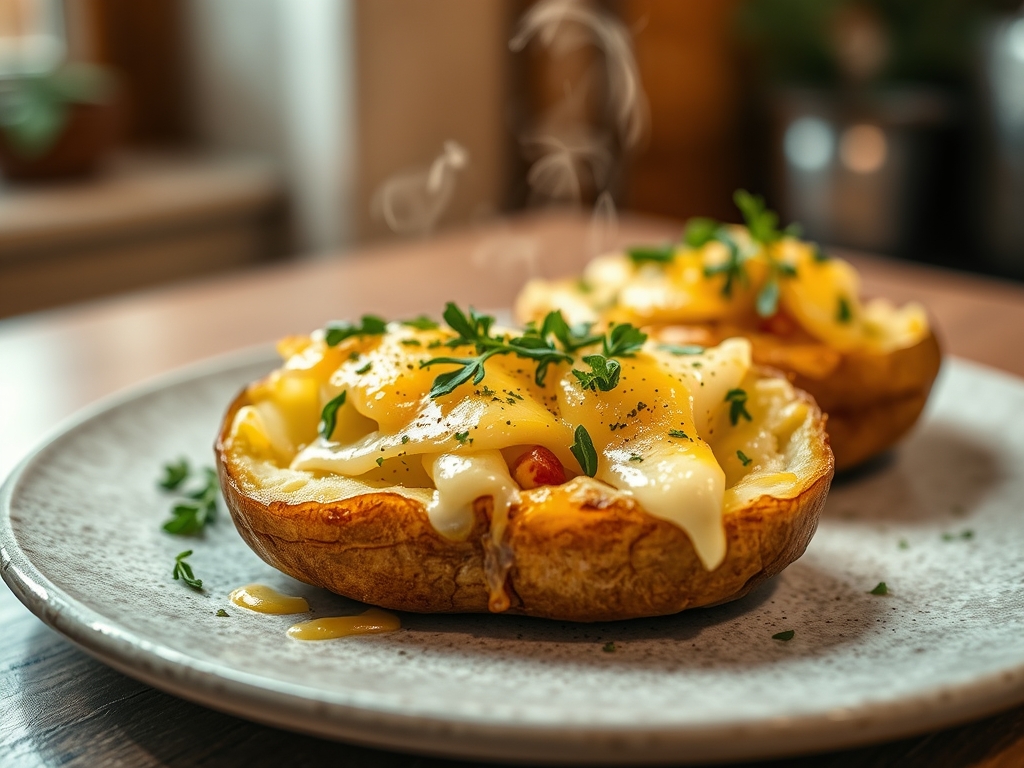
Imagine a cold Tuesday evening where the only thing standing between you and total bliss is a cloud of steam rising from a split, salt-crusted skin. We are diving deep into the world of baked potato recipes with cheese; a culinary landscape where the humble Russet becomes a vessel for molten, golden decadence. This is not just about dinner; it is about mastering the molecular magic of starch and fat.
The perfect potato is a study in contrasts. You want a skin so crisp it shattered like parchment, protecting an interior that has been transformed into a light, aerated fluff. When you introduce high-quality fats and sharp, aged cheeses, you create a chemical emulsion that coats every starch granule in a velvet sheen. It is comfort food elevated by technical precision. We are going beyond the basic butter pat to explore nine transformative hacks that will turn your kitchen into a high-end bistro. Whether you are craving a piquant blue cheese infusion or a viscous triple-cream brie melt, these techniques ensure your spuds are never soggy and always spectacular.
The Gathers:
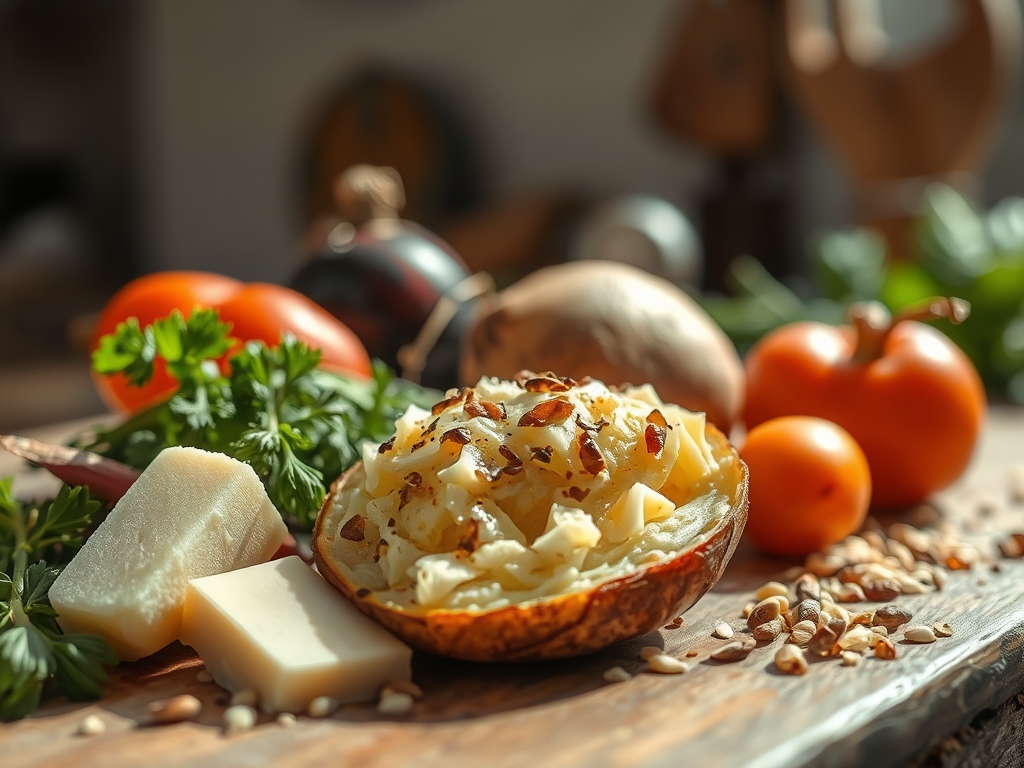
To achieve professional results, your mise-en-place must be intentional. Start with Russet potatoes, specifically chosen for their high starch content and low moisture. Using a digital scale, aim for tubers around 300 grams each; this ensures uniform thermal penetration. You will need a high-smoke-point fat like avocado oil or rendered duck fat to facilitate the Maillard reaction on the skin.
For the dairy, gather a range of textures. You need a viscous base like full-fat Greek yogurt or crème fraîche to provide acidity. For the cheese, use a microplane to grate aged Sharp Cheddar, Gruyere, or Fontina. Pre-shredded bags are forbidden here; they are coated in cellulose which prevents a smooth melt. For aromatics, finely mince chives using a sharp chef knife to avoid bruising the delicate cell walls.
Smart Substitutions: If you are avoiding nightshades, large Japanese Sweet Potatoes offer a similar amylopectin structure. For a lighter profile, swap heavy cream for a silken tofu emulsion blended with nutritional yeast to mimic that savory, umami-rich cheese profile without the heavy saturated fats.
The Clock
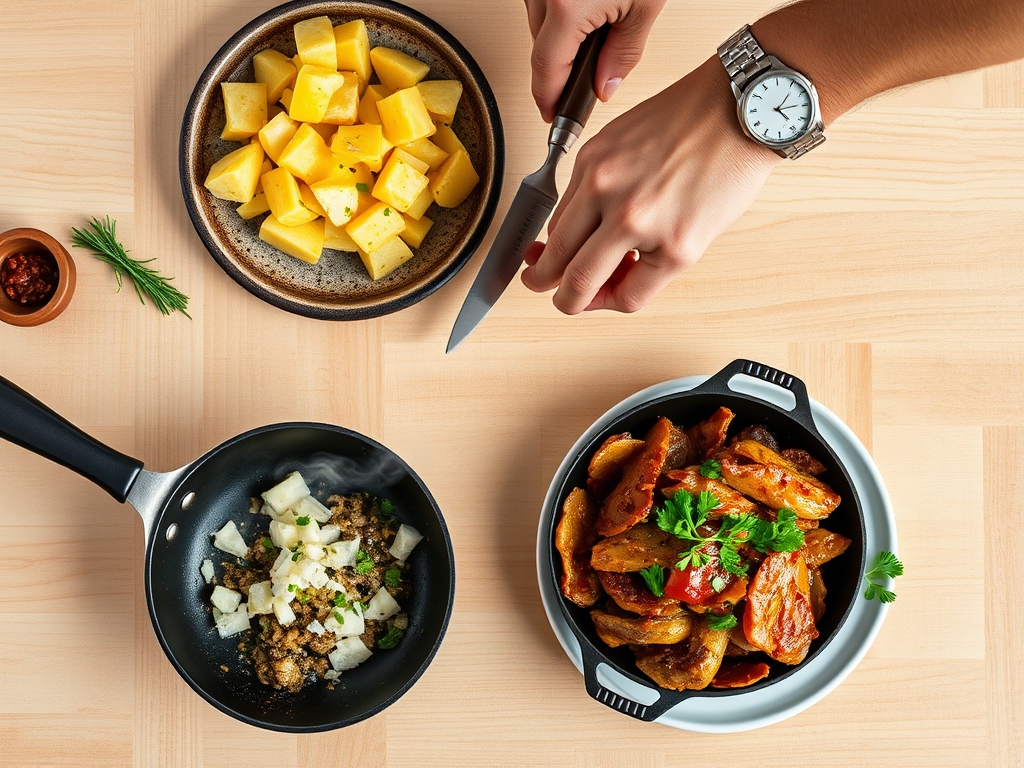
The "Chef's Flow" is all about overlapping tasks to maximize efficiency. Total active time is 15 minutes, while the oven does the heavy lifting for 60 to 75 minutes.
0-10 Minutes: Scrub and dry the potatoes. Dehydration is the enemy of a crisp skin, so use a lint-free kitchen towel. Prick the skins to allow steam to escape, preventing internal pressure build-up.
10-60 Minutes: The "Long Roast." This is when the starch granules swell and burst, creating that sought-after fluffiness.
60-75 Minutes: The "Cheese Infusion." This final window is for the secondary bake, where we incorporate our toppings and allow the cheese to undergo caramelization.
The Masterclass
1. The Brine Soak
Before the potato ever hits the heat, soak it in a 10 percent salt-water solution for ten minutes. This allows the salt to penetrate the skin through osmosis, seasoning the potato from the outside in.
Pro Tip: This salt concentration raises the boiling point of the water within the skin, leading to a faster breakdown of the pectin structures and a crunchier exterior.
2. The High-Heat Launch
Start your oven at 425 degrees Fahrenheit. Place the potatoes directly on the rack to allow 360-degree air circulation. Use stainless steel tongs to rotate them halfway through.
Pro Tip: Direct contact with the rack facilitates conduction heating, which accelerates the crisping process compared to the slower convection of a baking sheet.
3. The Internal Temp Check
Use an instant-read thermometer to pull the potatoes when the internal temperature hits 205 degrees Fahrenheit. This is the "sweet spot" where the starch is fully hydrated but not yet gummy.
Pro Tip: This prevents enzymatic browning from overcooking, which can turn the interior gray and impart a bitter, metallic aftertaste.
4. The Cross-Cut Aeration
Immediately upon removal, use a bench scraper or sharp knife to cut a deep "X" into the top. Use a clean towel to squeeze the sides, forcing the steam out and the fluff up.
Pro Tip: If you do not vent the steam immediately, it will re-condense into water droplets, turning your fluffy potato into a dense, soggy mass.
5. The Butter Emulsification
Add cold, cubed butter to the hot potato flesh and mash gently with a fork. Do not overwork it.
Pro Tip: Cold butter creates a fat-in-water emulsion as it melts slowly, resulting in a creamier mouthfeel than if you used melted butter, which would simply soak in and make the potato greasy.
6. The Cheese Layering
Fold in your microplaned cheese. For the ultimate baked potato recipes with cheese, use a blend of high-moisture mozzarella for "pull" and aged parmesan for "flavor."
Pro Tip: The residual heat performs thermal carryover, melting the cheese without breaking the fat solids, keeping the texture smooth and homogenous.
7. The Saucier Drizzle
If you are using a cheese sauce, prepare it in a heavy-bottomed saucier. Start with a roux and slowly whisk in whole milk to create a stable bechamel before adding cheese.
Pro Tip: A stable bechamel prevents the cheese from "oiling off," a common failure where the fat separates from the protein solids.
8. The Broiler Finish
Return the loaded potatoes to the oven under the broiler for 120 seconds. Watch for the cheese to bubble and develop small brown spots.
Pro Tip: This creates G-spots (Golden spots), which are concentrated areas of the Maillard reaction that provide a complex, nutty flavor profile.
9. The Fresh Finish
Top with cold chives, flaky sea salt, and a dash of smoked paprika. The temperature contrast between the hot potato and cold toppings is vital for a dynamic eating experience.
Pro Tip: Adding herbs at the very end preserves their volatile oils, ensuring the brightest aroma and flavor.
The Deep Dive
Macro Nutrition: A standard 300g Russet provides roughly 280 calories, 63g of carbohydrates, and 7g of protein. Adding 30g of cheddar and a tablespoon of butter adds approximately 220 calories and 18g of fat. While calorie-dense, potatoes are high in potassium and Vitamin C.
Dietary Swaps: For a Keto-friendly version, swap the potato for roasted cauliflower florets tossed in the same cheese blend. For Vegan guests, use a cashew-based "cheese" sauce thickened with tapioca starch for that signature stretch.
The Fix-It:
- Soggy Skin: You likely wrapped it in foil. Foil traps steam. Fix: Remove foil and bake at 450F for 10 minutes to dry the exterior.
- Gritty Cheese: You used pre-shredded cheese or overheated it. Fix: Stir in a teaspoon of warm heavy cream to re-emulsify the fats.
- Bland Interior: You didn't season the flesh. Fix: Use a small spoon to mix salt and pepper directly into the fluff before adding cheese.
Meal Prep: To reheat, avoid the microwave. Use an air fryer at 350F for 8 minutes. This restores the skin's crispness while gently melting the cheese, maintaining "day-one" structural integrity.
The Wrap-Up
Mastering baked potato recipes with cheese is a gateway to culinary confidence. It is a balance of temperature control, moisture management, and high-quality ingredient selection. By treating the potato not as a side dish, but as a canvas for scientific flavor layering, you transform a pantry staple into a gourmet masterpiece. Now, grab your tongs and get roasting!
The Kitchen Table
Which cheese is best for melting on potatoes?
High-moisture cheeses like Fontina, Gruyere, and young Cheddar melt most smoothly. For the best results, always grate your cheese fresh from a block to avoid anti-clumping agents that interfere with the melt.
How do I get the skin extra crispy?
Avoid aluminum foil at all costs. Coat the dry skin in a high-smoke-point oil and a generous amount of kosher salt. Bake directly on the oven rack to ensure maximum airflow and moisture evaporation.
Can I make these ahead of time?
You can par-bake potatoes for 45 minutes, cool them, and finish the final 20 minutes before serving. This ensures the skin stays crisp and the interior remains fluffy rather than becoming dense during storage.
Why is my potato gummy inside?
Gumminess occurs when the potato is over-handled or undercooked. Use a fork to gently fluff the starch granules. If the internal temperature doesn't reach 205 degrees Fahrenheit, the starch won't fully hydrate, resulting in a waxy texture.