
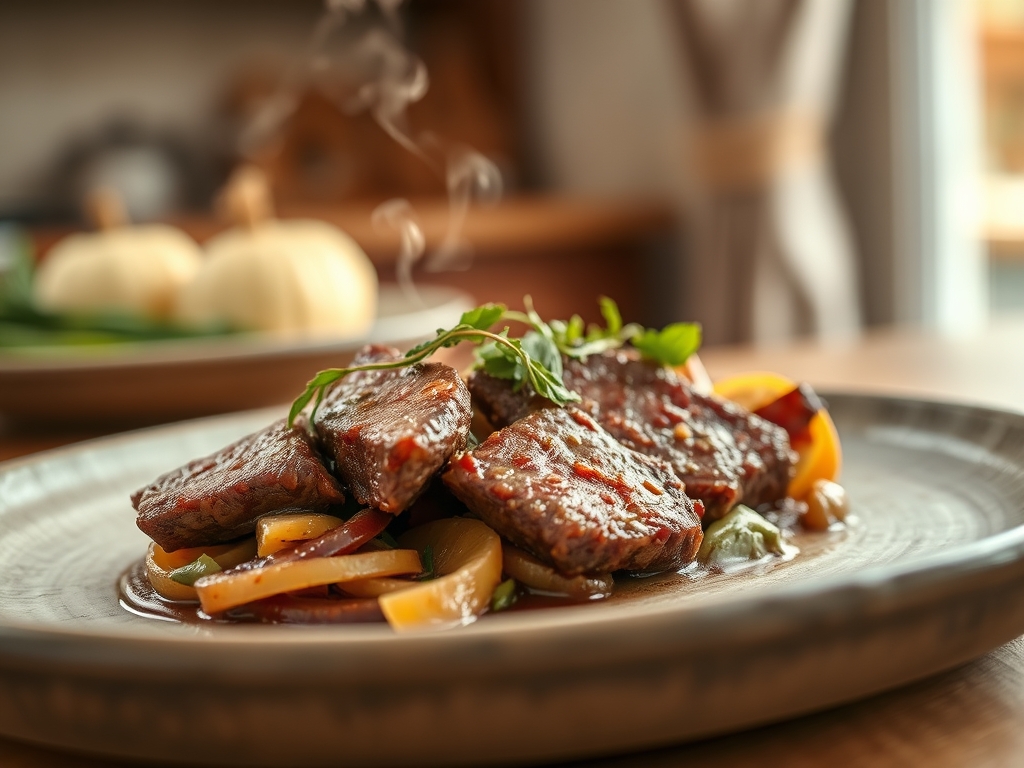
Imagine the heavy, golden scent of rosemary and garlic blooming in a pool of molten butter while a prime rib sizzles in a heavy-bottomed skillet. While turkey often claims the spotlight, the true center of gravity for a sophisticated holiday table lies in the rich, savory depth of beef recipes thanksgiving. There is a primal, magnetic pull to a perfectly rendered fat cap and the deep umami of a red wine reduction. We are moving beyond the basic roast; we are diving into the molecular magic of high-end butchery to ensure your guests are still talking about the crust on your tenderloin by New Year's Eve.
The shift toward beef is not just about flavor; it is about the chemistry of satisfaction. When you present a glistening Chateaubriand or a slow-braised short rib, you are offering a complex profile of Maillard reactions that turkey simply cannot replicate. This year, we are elevating the holiday with ten impressive variations, from the classic Wellington to a piquant, herb-crusted ribeye. We will master the art of the reverse sear and the science of the rest, ensuring every slice is a uniform, edge-to-edge pink that defies the traditional dry holiday bird.
The Gathers:
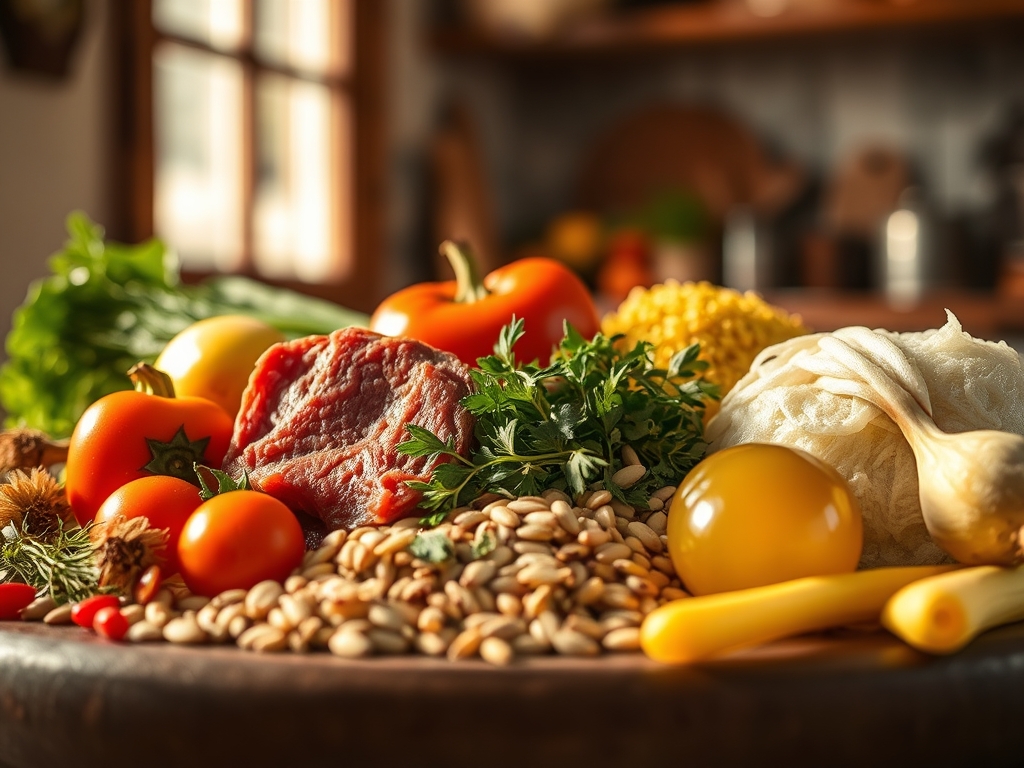
To execute these beef recipes thanksgiving with precision, your mise-en-place must be a study in chemical potential. Start with the protein: look for intramuscular marbling, specifically the white flecks of intramuscular fat that will melt during the cooking process to lubricate the muscle fibers. You will need a high-quality kosher salt; its jagged crystal structure allows for better adhesion to the meat surface compared to table salt. Fresh aromatics are non-negotiable. Gather bundles of thyme, rosemary, and sage, alongside whole heads of garlic that we will later confit in the pan juices.
For your liquid components, secure a bottle of dry red wine with high tannin content, such as a Cabernet Sauvignon, to help break down connective tissues in braised dishes. You will also need high-smoke-point fats like avocado oil or clarified butter (ghee) for the initial sear. If you are aiming for a viscous, glossy sauce, keep chilled cubes of unsalted butter ready for monter au beurre, the technique of whisking cold butter into a hot sauce to create a stable emulsion.
Smart Substitutions: If you cannot find a whole beef tenderloin, a top sirloin roast offers a similar lean profile at a more accessible price point. For those avoiding alcohol, a high-quality beef bone broth infused with a tablespoon of balsamic vinegar provides the necessary acidity and depth to deglaze your pans without the wine.
The Clock
Efficiency in a holiday kitchen is governed by the Chef's Flow, a sequence that prioritizes temperature stability and resting periods. For a large roast, expect a total commitment of four to five hours. This includes one hour for the meat to reach room temperature (tempering), two to three hours of active roasting or braising, and a mandatory forty-five-minute rest.
Smaller cuts, like individual filets or a rolled flank steak, require a tighter timeline of about ninety minutes. The "Flow" dictates that you prepare your cold components (horseradish creams or herb rubs) during the tempering phase. While the beef rests, use that thirty-to-forty-minute window to utilize the oven for high-heat sides or to finish your pan sauces. Never rush the rest; it is the most critical "ingredient" for moisture retention.
The Masterclass
1. Tempering and Seasoning
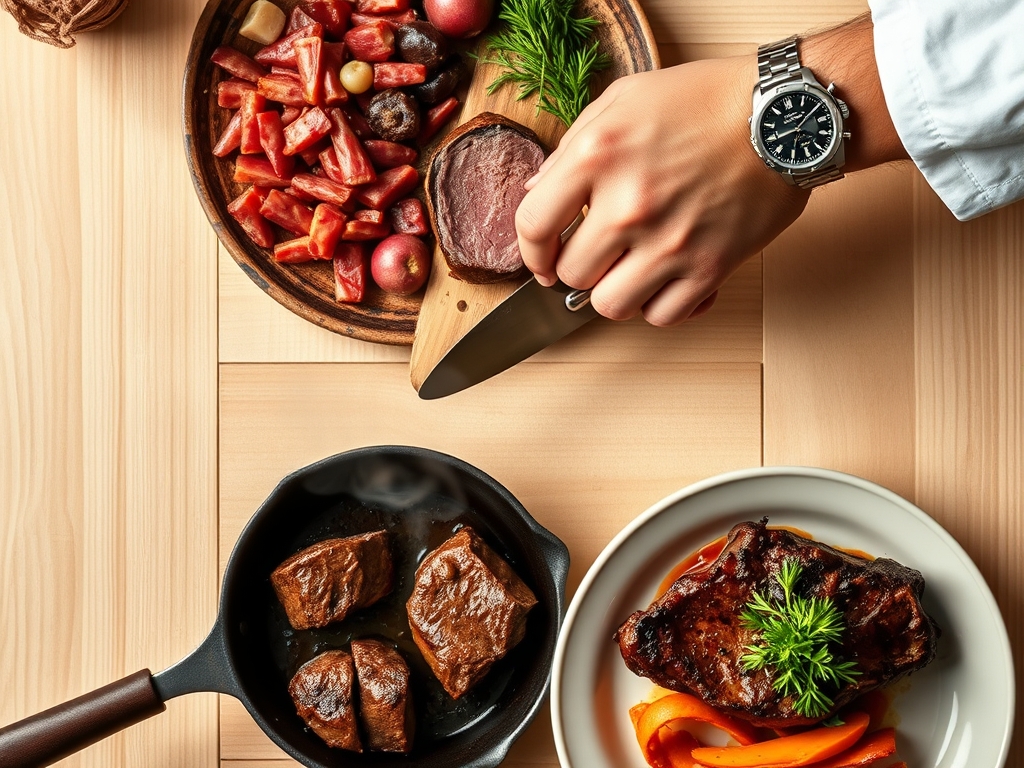
Remove your beef from the refrigerator at least sixty minutes before cooking. Use a paper towel to blot the surface until it is bone-dry; moisture is the enemy of a good sear. Liberally apply kosher salt to trigger osmosis, which initially draws moisture out but eventually reabsorbs the brine into the fibers for deep seasoning.
Pro Tip: This pre-salting helps denature proteins, allowing them to hold onto more water during the heat cycle, resulting in a juicier final product.
2. The High-Heat Sear
Heat a heavy-bottomed skillet until the oil reaches its smoke point. Place the beef in the pan, pressing down with tongs to ensure maximum surface contact. Look for a deep mahogany crust, which is the visual indicator of the Maillard reaction, a chemical dance between amino acids and reducing sugars.
Pro Tip: Avoid moving the meat too early. If it sticks, the crust has not fully formed; wait for the protein to naturally release from the metal.
3. Precision Roasting
Transfer the beef to a wire rack set over a sheet pan. This allows hot air to circulate around the entire circumference of the meat, preventing a soggy bottom. Insert a digital probe thermometer into the thickest part of the muscle, avoiding fat pockets or bone, which can give false temperature readings.
Pro Tip: Aim for an oven temperature of 250 degrees Fahrenheit for a "low and slow" approach. This minimizes the gray band of overcooked meat beneath the crust.
4. The Deglaze and Emulsion
Once the beef is removed, the skillet will be covered in fond, those delicious caramelized bits. Pour in your wine or stock and use a wooden spoon or bench scraper to lift those bits. Reduce the liquid by half to concentrate the flavors, then finish by whisking in cold butter or using a microplane to zest in fresh horseradish.
Pro Tip: Deglazing is a solvent-based extraction process that pulls aromatic compounds back into the liquid phase for a complex sauce.
5. The Rest and Carve
Place the beef on a warm cutting board and tent loosely with foil. During this time, the internal temperature will rise by five to ten degrees due to thermal carryover. Once the internal pressure has stabilized, use a long, sharp slicing knife to cut against the grain, shortening the muscle fibers for a tender mouthfeel.
Pro Tip: Resting allows the muscle fibers to relax and reabsorb the juices that were pushed to the center during cooking; cutting too early results in a dry roast and a messy board.
The Deep Dive
Macro Nutrition: Beef is a powerhouse of bioavailable protein, heme iron, and B12. A standard six-ounce serving of lean roast beef provides approximately 45 grams of protein. To balance the richness of these beef recipes thanksgiving, pair them with fibrous cruciferous vegetables like roasted Brussels sprouts to aid digestion.
Dietary Swaps: For a Keto-friendly version, replace flour-based thickeners in your gravy with a xanthan gum slurry or simply reduce the heavy cream. For a Gluten-Free approach, ensure your beef base and Worcestershire sauce are certified GF. If you have guests who prefer a plant-based option, a "beet Wellington" using the same puff pastry and mushroom duxelles techniques offers a visually similar and savory alternative.
The Fix-It:
- The Gray Band: If your meat has a thick ring of overcooked gray around the pink center, your oven was too hot. Fix this next time by lowering the temp and using a reverse-sear method.
- Broken Sauce: If your red wine reduction looks oily, it has "split." Whisk in a tablespoon of warm water or a splash of heavy cream to re-emulsify the fats.
- Tough Texture: If the beef is chewy, you likely cut with the grain. Always identify the direction of the muscle fibers and slice perpendicular to them.
Meal Prep: To reheat beef without losing the medium-rare center, use the "sous vide" method by placing slices in a sealed bag in warm water, or heat them in a 250-degree oven tightly wrapped in foil with a splash of beef broth to maintain humidity.
The Wrap-Up
Mastering beef recipes thanksgiving is the ultimate culinary power move. It transforms a standard dinner into a high-end gastronomic event, fueled by the science of heat and the precision of professional technique. By focusing on the Maillard reaction, respecting the rest, and utilizing tools like the digital scale and probe thermometer, you ensure a flawless execution. This holiday, let the turkey be the side dish; the beef is the real star of the show.
The Kitchen Table
How do I ensure my beef roast is tender?
Always slice against the grain to shorten muscle fibers. Additionally, allow the meat to rest for at least 20 to 30 minutes; this allows the internal juices to redistribute, preventing the meat from becoming tough and dry when sliced.
What is the best cut of beef for Thanksgiving?
A whole beef tenderloin or a standing rib roast are the gold standards. Tenderloin offers unparalleled tenderness and a lean profile, while the rib roast provides intense flavor and rich marbling that creates a spectacular holiday centerpiece.
How do I get a perfect crust on the beef?
Ensure the surface of the meat is completely dry before cooking. Use a heavy-bottomed skillet and high-smoke-point oil. Don't crowd the pan; this prevents steaming and allows the Maillard reaction to create a deep, flavorful mahogany crust.
What temperature should I pull beef for medium-rare?
Remove the beef from the oven when the internal temperature hits 125°F to 130°F. Thermal carryover will continue to cook the meat as it rests, bringing the final internal temperature to the ideal medium-rare range of 135°F to 140°F.