
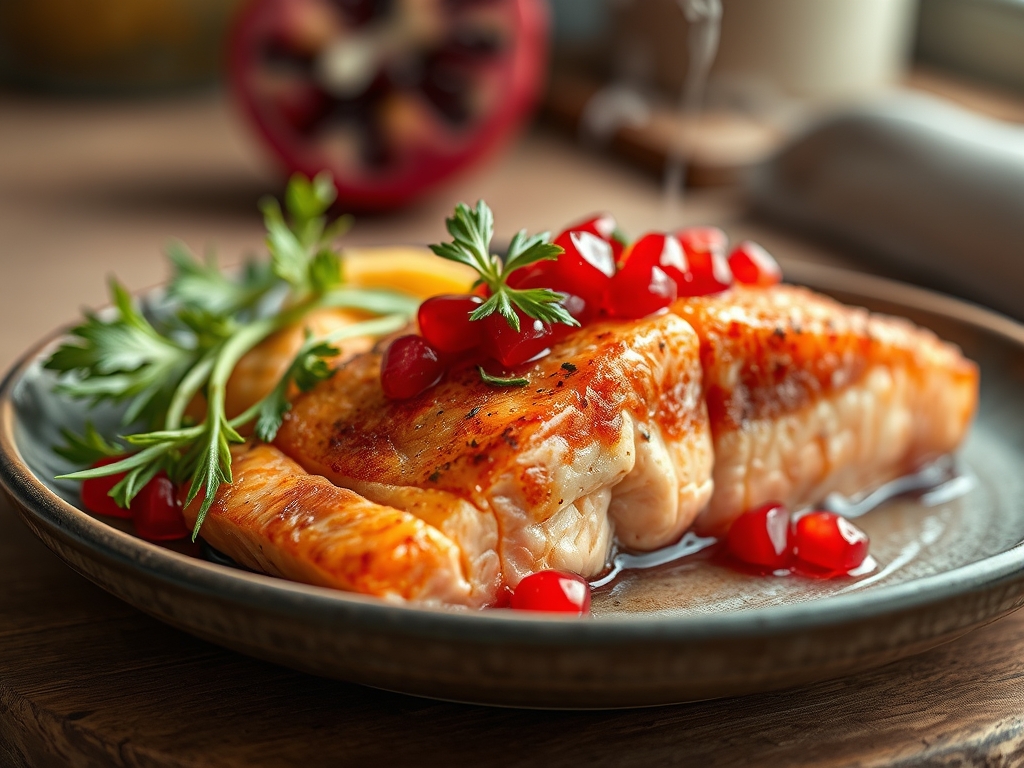
Imagine a crisp kitchen counter where the sharp scent of citrus meets the deep, earthy sweetness of a reduction bubbling on the stove. There is something inherently cinematic about the way a dark ruby glaze clings to a perfectly seared fillet of fish. When you master pomegranate salmon recipes, you are not just cooking dinner; you are orchestrating a balance of pH and protein. The acidity of the fruit cuts through the rich, fatty lipids of the salmon, creating a flavor profile that is both piquant and sophisticated. It is the ultimate "quiet luxury" meal that looks like a million dollars but relies on simple, high-level molecular principles. We are going to transform a standard piece of seafood into a lacquered masterpiece that shatters under the fork to reveal succulent, translucent flakes. Whether you are hosting a gallery opening or just treating yourself after a long Tuesday, these techniques will elevate your culinary game. Let us get into the grit of the grains and the heat of the pan to see how science makes the magic happen.
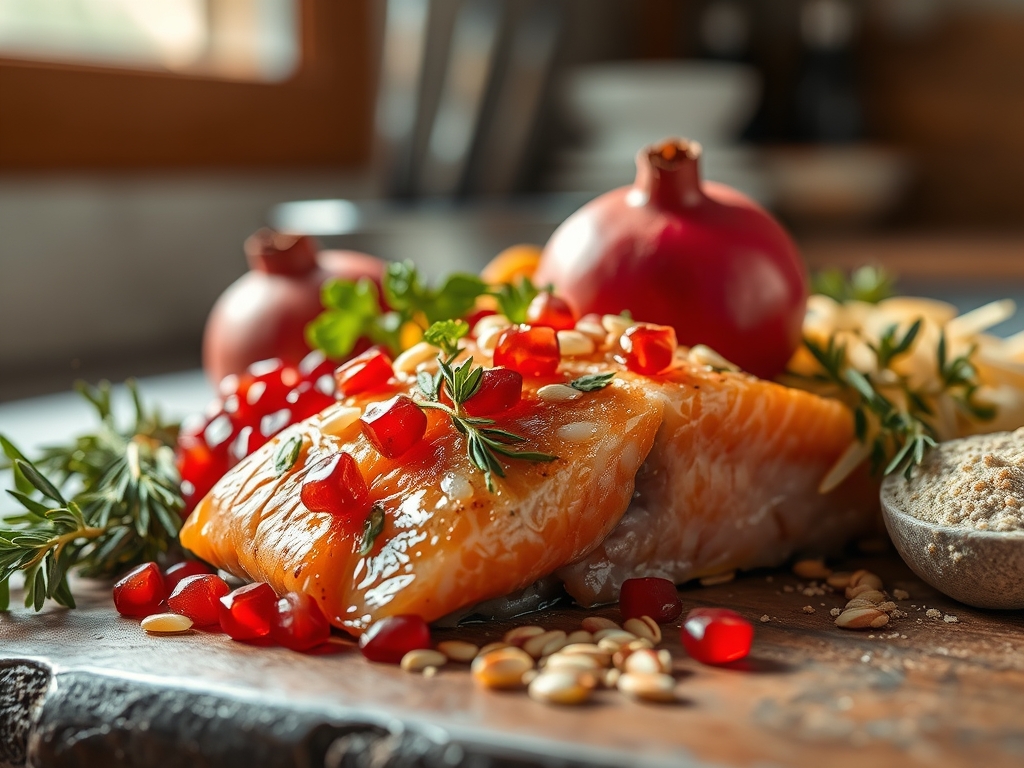
The Gathers:
To achieve the perfect pomegranate salmon recipes, your mise-en-place must be precise. Start with four 6-ounce center-cut fillets; look for the "King" or "Sockeye" varieties for their high fat content and structural integrity. You will need a saucier to handle the glaze, as the rounded bottom prevents sugar crystals from scorching in the corners. Gather 1 cup of pure pomegranate juice (no added sugar), 2 tablespoons of honey to assist in the Maillard reaction, and 1 tablespoon of balsamic vinegar for a complex acid profile. For the aromatics, have a knob of fresh ginger and two cloves of garlic ready for the microplane.
Smart Substitutions: If you cannot find fresh pomegranates for garnish, dried barberries offer a similar tart punch. For a keto-friendly version, swap the honey for an allulose-based syrup; it browns similarly without the glycemic load. If you are out of balsamic, a dark sherry vinegar provides that same deep, fermented undertone. Always use a digital scale to measure your liquids if you want consistent viscosity every single time you cook.
The Clock: Chef's Flow
Efficiency in the kitchen is about heat management and timing. Your total active time is roughly 15 minutes, with a total "plate-to-table" window of 30 minutes. The "Chef's Flow" dictates that you start the glaze first. Because the juice must reduce by half to reach a viscous consistency, it needs a 10-minute head start. While the liquid simmers, you prep the fish. Salmon should sit at room temperature for about 15 minutes before hitting the pan; this prevents the "cold core" syndrome where the outside overcooks while the inside remains raw. The actual searing takes 4 minutes per side, followed by a 3-minute rest. This rest period is non-negotiable; it allows the muscle fibers to relax and reabsorb the internal juices.
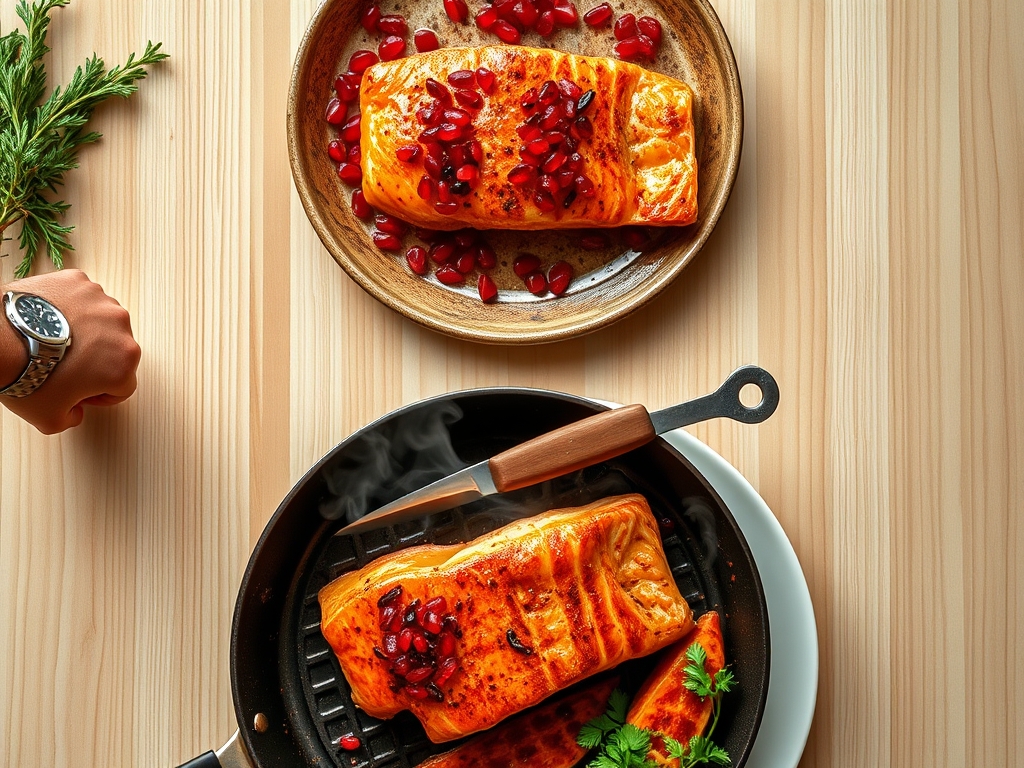
The Masterclass
1. The Glaze Reduction
Pour your juice, honey, and vinegar into the saucier over medium-high heat. Bring it to a boil, then drop to a simmer. You are looking for "nappe" consistency, where the sauce coats the back of a spoon.
Pro Tip: This process is called evaporative concentration. By removing water, you are intensifying the natural pectin and sugars, which ensures the glaze sticks to the fish rather than sliding off into the pan.
2. Surface Preparation
Pat the salmon fillets bone-dry with paper towels. Use a bench scraper to move them to a clean station. Season liberally with kosher salt and cracked black pepper.
Pro Tip: Moisture is the enemy of the sear. If the surface is damp, the heat energy goes into evaporating water (steaming) rather than the Maillard reaction, which is the chemical reaction between amino acids and reducing sugars that creates the savory crust.
3. The Sear
Heat a heavy-bottomed skillet (cast iron is king here) with a high-smoke-point oil like avocado oil. Once the oil shimmers, lay the fish skin-side down using tongs. Press gently for 30 seconds.
Pro Tip: This initial pressure prevents the skin from curling. The heat causes the collagen in the skin to denature and contract; pressing it flat ensures even heat distribution and maximum crispiness.
4. The Flip and Lacquer
After 4 minutes, flip the fish. Immediately brush a thick layer of the pomegranate reduction onto the seared side. Let it cook for another 3 to 4 minutes.
Pro Tip: Adding the glaze too early will cause the sugars to burn before the fish is cooked. By applying it toward the end, you achieve a "lacquered" finish through caramelization without the bitter notes of scorched carbon.
5. The Carryover Rest
Remove the fish from the pan when a meat thermometer reads 125 degrees Fahrenheit for medium-rare. Place on a warm plate and tent loosely with foil.
Pro Tip: This utilizes thermal carryover. The internal temperature will continue to rise about 5 to 7 degrees after removal. If you wait until it hits 145 in the pan, the fish will be dry and chalky by the time you eat it.
The Deep Dive
Macro Nutrition: One serving of this pomegranate salmon contains approximately 34g of protein, 14g of healthy monounsaturated fats, and 12g of carbohydrates (mostly from the fruit reduction). It is a powerhouse of Omega-3 fatty acids, which are essential for brain health and reducing inflammation.
Dietary Swaps:
- Vegan: Use the glaze on thick slabs of "Lion's Mane" mushrooms or extra-firm tofu pressed for 30 minutes.
- Keto: Replace honey with monk fruit drops and use a splash of coconut aminos instead of balsamic.
- GF: This recipe is naturally gluten-free, but always check your balsamic vinegar labels for added thickening agents.
The Fix-It:
- The Glaze is Too Thin: If it is watery, whisk in a tiny "slurry" of cornstarch and water, then boil for 30 seconds. This uses starch gelatinization to instantly thicken the liquid.
- The Skin Stuck to the Pan: You likely flipped it too early. Protein "releases" naturally from the pan once the sear is complete. If it sticks, give it 30 more seconds of high heat.
- White Gunk on the Fish: That is albumin, a protein that pushes out when the fish cooks too fast or too long. Lower your heat slightly next time to keep those proteins inside the muscle fibers.
Meal Prep & Reheating: To maintain "day-one" quality, reheat the salmon in a 275-degree oven with a splash of water covered in foil. This creates a gentle steam environment that prevents the fats from turning rancid or the texture from becoming rubbery. Avoid the microwave at all costs; it vibrates water molecules too violently, destroying the delicate flake.
The Wrap-Up
Mastering pomegranate salmon recipes is a rite of passage for any home cook looking to bridge the gap between "dinner" and "dining." By understanding the science of the sear and the chemistry of a reduction, you turn simple ingredients into a vibrant, healthful masterpiece. The contrast of the ruby-red glaze against the pink fish is a visual feast, but the real victory is that first, perfect, melt-in-your-mouth bite. Now, grab your tongs, fire up the stove, and let the kitchen become your laboratory. You have the tools, the technique, and the talent to make this legendary.
The Kitchen Table
How do I get the skin extra crispy?
Ensure the skin is bone-dry and the pan is searing hot before contact. Use a heavy-bottomed skillet to maintain consistent heat and press the fillet down with a spatula for the first thirty seconds to ensure full surface contact.
Can I use bottled pomegranate molasses?
Yes, but be careful with the heat. Commercial molasses is already highly reduced and contains high sugar levels. Thin it with a little water or lemon juice to prevent it from burning instantly in the pan.
What is the best way to tell if salmon is done?
Use a digital thermometer to reach 125-130 degrees Fahrenheit for a moist, medium center. Alternatively, press the top of the fillet; if it begins to flake along the natural white fat lines, it is ready.
Why did my glaze turn bitter?
Bitterness usually occurs if the sugars in the pomegranate juice or honey have scorched. Keep the heat at a simmer, not a rolling boil, and use a saucier to ensure even heating without hot spots.
How long can I store leftover pomegranate salmon?
Store in an airtight container for up to two days. For the best texture, eat it cold over a salad or reheat gently using the "low and slow" oven method to preserve the delicate fats.